Discover how soft play centres develop crucial social skills in young children. Expert insights on emotional intelligence, sharing & teamwork at Bubbles.
As a parent, you might think of soft play centres purely as places where children burn off energy. But research shows that soft play environments offer something far more valuable: they’re powerful spaces for developing essential social and emotional skills that will serve your child throughout their life.
If your preschooler struggles with sharing, gets overwhelmed in group situations, or finds it hard to make friends, soft play could be the gentle, fun-filled solution you’ve been looking for. Let’s explore exactly how these colourful play spaces become classrooms for life’s most important lessons.
Why Social Skills Matter for Preschoolers
Before we dive into how soft play helps, it’s worth understanding why social development is so crucial during the preschool years (ages 2-5).
Critical Development Window Between ages 2 and 5, children’s brains form over 1 million neural connections every second. This period represents a unique opportunity to establish social patterns that become second nature.
Foundation for School Success Research from the University of Cambridge shows that children with strong social skills at age 4 are:
- 46% more likely to graduate from university
- More emotionally resilient during challenges
- Better able to form lasting friendships
- More successful in collaborative work environments
Emotional Intelligence Development Preschool is when children learn to:
- Recognise emotions in themselves and others
- Develop empathy and compassion
- Navigate conflict without aggression
- Regulate their responses to frustration
The good news? You don’t need expensive classes or complicated activities. A regular visit to a quality soft play centre like Bubbles provides the perfect environment for all this learning to happen naturally.
How Soft Play Develops Key Social Skills
1. Turn-Taking and Patience
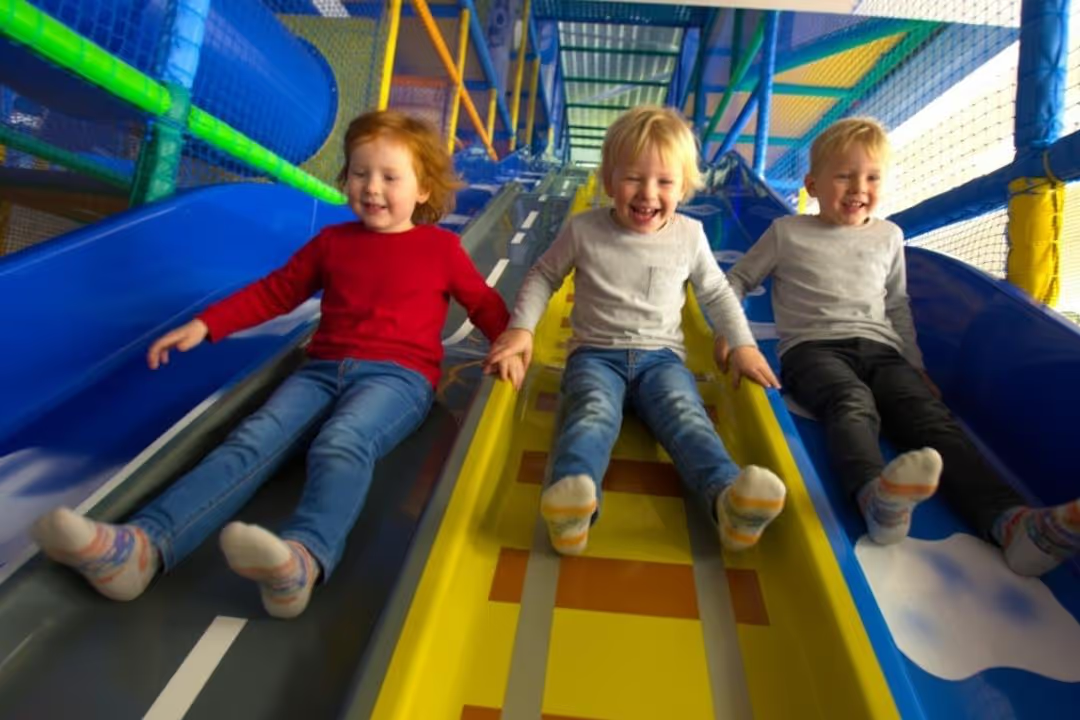
The Learning Environment: Soft play centres naturally create situations where children must wait their turn—whether it’s queuing for the slide, waiting to enter the ball pit, or taking turns on the zip line.
What They Learn:
- Delayed gratification (the ability to wait for something rewarding)
- Impulse control (resisting the urge to push in or grab)
- Patience as a positive trait
- Understanding that everyone gets a fair chance
Why It Works at Soft Play: Unlike home, where parents might intervene to “keep the peace,” soft play allows children to navigate these situations with their peers. The reward—sliding down, jumping in the ball pit—is immediate and enjoyable, which reinforces the patience they showed while waiting.
Parent Tip: Resist the urge to orchestrate every interaction. Stand back and let your child work out turn-taking with other children. Only step in if safety becomes a concern.
2. Sharing and Cooperation
The Scenarios: At Bubbles, children constantly encounter situations requiring cooperation:
- Building together in the construction zone
- Playing with shared toys in the toddler area
- Creating games with other children
- Helping younger children navigate equipment
Development Benefits:
- Understanding that resources can be shared without loss
- Learning to ask politely rather than grab
- Experiencing the joy of collaborative play
- Developing generosity as a value
Real-World Application: Sarah, a parent from Wirral, shared: “My daughter used to hoard all her toys at home. After a few months of regular soft play sessions, she started offering toys to other children without being prompted. It was like watching a switch flip!“
3. Communication Skills
Structured Play Opportunities: Soft play centres force children to communicate because they need to:
- Ask others to move or share space
- Explain game rules they’ve invented
- Request help when stuck or scared
- Express needs to staff and other adults
Language Development:
- Expanding vocabulary through interaction with diverse children
- Learning different communication styles
- Understanding tone and body language
- Practising polite phrases (“excuse me,” “please,” “thank you”)
Non-Verbal Communication: Younger toddlers who aren’t yet confident talkers learn to:
- Use gestures and expressions effectively
- Read other children’s body language
- Understand social cues without words
- Express themselves through movement and play
4. Conflict Resolution
Safe Space for Disagreements: Soft play provides the perfect low-stakes environment for children to experience and resolve minor conflicts:
- Disagreements about who’s “it” in a game
- Different ideas about how to play
- Accidental bumps or collisions
- Competition for popular equipment
Skills Developed:
- Expressing feelings using words instead of hitting/grabbing
- Listening to another child’s perspective
- Finding compromises that work for everyone
- Apologising when they’ve hurt someone
- Accepting apologies from others
What Makes Soft Play Ideal: The consequences are minimal (unlike school where conflicts might lead to punishment), and children have immediate opportunities to “try again” with the same child or a different playmate.
5. Empathy and Emotional Recognition
Observational Learning: In the multi-age environment of soft play centres, preschoolers observe:
- Older children helping younger ones
- Other children crying when hurt or frustrated
- Friends comforting each other
- Different emotional reactions to the same situation
Empathy Building Activities: Children naturally engage in empathy-developing behaviours:
- Checking if another child is okay after a fall
- Sharing excitement when someone conquers a challenging obstacle
- Adjusting play style for younger or more timid children
- Recognising when someone wants to be left alone
Emotional Literacy: Through these interactions, children learn to identify and name emotions:
- “She looks sad because…”
- “He’s excited about…”
- “They’re frustrated when…”
- “I feel happy when…“
6. Self-Regulation and Emotional Control
Physical Outlet: The intense physical activity at soft play helps children:
- Release pent-up energy that might otherwise manifest as aggression
- Learn to recognise their physical limits
- Understand when they need a break
- Manage overstimulation
Emotional Management: Children practice:
- Handling disappointment (someone else using their favourite slide)
- Managing fear (attempting a challenging climb)
- Celebrating success appropriately (not boasting or excluding others)
- Coping with sensory overload (knowing when to retreat to quieter areas)
Self-Awareness Development: Preschoolers begin to:
- Recognise their emotional triggers
- Identify when they’re getting overwhelmed
- Use strategies to calm themselves (deep breaths, taking a break)
- Ask adults for help when needed
The Role of Mixed-Age Play
One unique advantage of soft play centres like Bubbles World of Play is the opportunity for mixed-age interaction, which research shows provides distinct social benefits.
Benefits for Younger Children:
- Learning by observing more advanced social behaviours
- Experiencing nurturing from older children
- Aspiring to more sophisticated play
- Feeling protected and included
Benefits for Older Children:
- Developing leadership and mentoring skills
- Practising patience and gentleness
- Building confidence through helping
- Learning to adjust behaviour for different audiences
Natural Social Hierarchy: Unlike same-age playgroups, mixed-age environments create a more natural social structure where:
- Children learn their place in a social context
- Older children model prosocial behaviours
- Younger children have clear role models
- Everyone has someone to look up to and someone to support
Creating the Right Soft Play Experience for Social Development
Not all soft play visits are equally beneficial for social development. Here’s how to maximise the learning opportunities:
Choose the Right Time
- Visit during moderately busy periods (not empty, not overcrowded)
- Weekday mornings often provide the ideal balance
- Avoid peak times if your child gets overwhelmed easily
- Regular visits at consistent times help children build familiarity with other regular attendees
Let Them Lead
- Resist over-managing their play
- Don’t force interactions with other children
- Allow them to watch from the sidelines if they need time
- Trust the process—social skills develop at different rates
Debrief After Visits Use the car ride home to process experiences:
- “I noticed you helped that little boy find his way out of the maze. How did that feel?”
- “What did you do when those children wanted to play the same game?”
- “I saw you waiting patiently for your turn. That must have been hard!”
Consistency Matters
- Weekly or fortnightly visits are more beneficial than occasional trips
- Regular attendance helps children form relationships with other regulars
- Familiar environments reduce anxiety and allow children to focus on social learning
Stay Present But Hands-Off
- Remain available for support if needed
- Watch from a distance rather than hovering
- Only intervene for safety issues
- Let children solve minor disputes themselves
Red Flags and When to Seek Additional Support
While most children develop social skills naturally through soft play and other activities, watch for these signs that might indicate a need for additional support:
Consistent Struggles:
- Aggressive behaviour that doesn’t improve over time
- Complete withdrawal from other children despite regular exposure
- Extreme anxiety around other children
- Inability to play alongside peers without constant conflict
Important Note: Many perfectly typical children go through phases of social difficulty. Occasional shyness, disagreements, or rough play doesn’t indicate a problem. It’s persistent patterns over many months that might warrant professional assessment.
Where to Find Support: If you’re concerned:
- Speak to your health visitor or GP
- Consider a child development assessment
- Look into social skills groups for preschoolers
- Continue regular soft play visits as part of a broader support plan
The Science Behind Soft Play and Social Development
Neurological Benefits: Research from the University of Portsmouth shows that physical play activates the prefrontal cortex—the part of the brain responsible for social interaction and emotional regulation.
Stress Reduction: Physical activity releases endorphins, which reduces cortisol (the stress hormone). Lower stress levels make children more receptive to social learning and better able to regulate emotions.
Mirror Neuron Activation: When children observe others at play, their mirror neurons fire, essentially allowing them to “practice” social behaviours through observation before attempting them independently.
Executive Function Development: The combination of physical challenges and social navigation in soft play strengthens executive function skills:
- Working memory (remembering rules and social expectations)
- Cognitive flexibility (adapting play style for different situations)
- Inhibitory control (stopping impulsive behaviours)
Real Parent Experiences
From Shy to Social: “My son barely spoke to other children before we started visiting Bubbles regularly. Three months later, he runs in looking for his ‘soft play friends.’ The change has been remarkable.” - Emma, Heswall
Conflict Resolution Skills: “After watching how children at soft play worked out disagreements, my daughter started using those same techniques with her siblings. She’ll actually suggest solutions now instead of just crying!” - James, West Kirby
Emotional Awareness: “The biggest change I’ve seen is in how my daughter talks about feelings. She’ll say things like ‘that boy looked sad’ or ‘she was happy when her daddy arrived.’ That awareness just wasn’t there before.” - Lisa, Liverpool
Practical Tips for Different Personality Types
For Shy or Anxious Children:
- Start with shorter visits during quieter times
- Stay close by initially, gradually increasing distance
- Celebrate small wins (“You went down the slide with another child!”)
- Don’t force interaction—parallel play is a valid first step
- Consider inviting a familiar friend to attend together initially
For Energetic or Boisterous Children:
- Set clear expectations before arrival
- Use a “check-in” system every 20 minutes
- Practice gentle touch and appropriate space with stuffed animals at home
- Praise specific good behaviours you observe
- Ensure they burn off initial energy before expecting social interaction
For Children Who Play Rough:
- Pre-visit conversation about “soft play, soft hands”
- Immediate calm consequences for aggressive behaviour (sitting with you briefly)
- Highlight children who are playing gently: “Look how carefully she climbed past that little one”
- Ensure adequate physical challenge so energy isn’t expressed through roughness
Beyond Soft Play: Extending Social Learning
While soft play provides excellent opportunities, combine it with:
- Playdates: One-on-one practice in less stimulating environments
- Story Time: Books about friendship, sharing, and emotions
- Role Play: Practice social scenarios at home with toys
- Emotion Cards: Help children identify and name feelings
- Team Activities: Swimming lessons, toddler groups, music classes
How Bubbles Specifically Supports Social Development
At Bubbles World of Play in Wirral, we’ve designed our space with social development in mind:
Age-Appropriate Zones:
- Separate toddler area for gentler play
- Graduated challenges that encourage peer support
- Quiet zones for children who need sensory breaks
Trained Staff:
- Team members who model prosocial behaviours
- Staff who facilitate (but don’t force) positive interactions
- Awareness of developmental milestones and individual needs
Inclusive Environment:
- Welcome children of all abilities
- Ensure every child can participate at their level
- Create opportunities for diverse friendships
Community Feel:
- Regular attendees form friendship groups
- Birthday parties extend social opportunities
- Family-friendly café where parents can connect
The Long-Term Benefits
Investing in social skill development during the preschool years pays dividends throughout life:
Academic Success:
- Better classroom behaviour and participation
- Improved ability to work in groups
- Greater resilience when facing challenges
- Enhanced focus and attention
Mental Health:
- Lower rates of anxiety and depression in later childhood
- Better self-esteem and confidence
- Stronger emotional regulation skills
- Healthier relationship patterns
Career and Life Success:
- Superior collaboration abilities in the workplace
- Better conflict resolution in personal relationships
- Enhanced leadership potential
- Greater overall life satisfaction
Conclusion
Soft play isn’t just about burning energy—it’s about building the social and emotional foundation your child needs to thrive. Every turn they wait for, every conflict they resolve, and every friendship they form is strengthening neural pathways that will serve them for life.
The preschool years offer a unique window when social learning happens naturally through play. By providing regular opportunities at quality soft play centres like Bubbles, you’re giving your child one of the most valuable gifts possible: the ability to navigate the social world with confidence, empathy, and joy.
Ready to support your child’s social development? Book your visit to Bubbles World of Play today and watch as play becomes your child’s most important classroom.
Looking for more parenting insights? Explore our guide on how to prepare for your first soft play visit to make the most of your experience.