Discover how active play helps your child's physical and mental development. Research-backed benefits of physical play for toddlers and children.
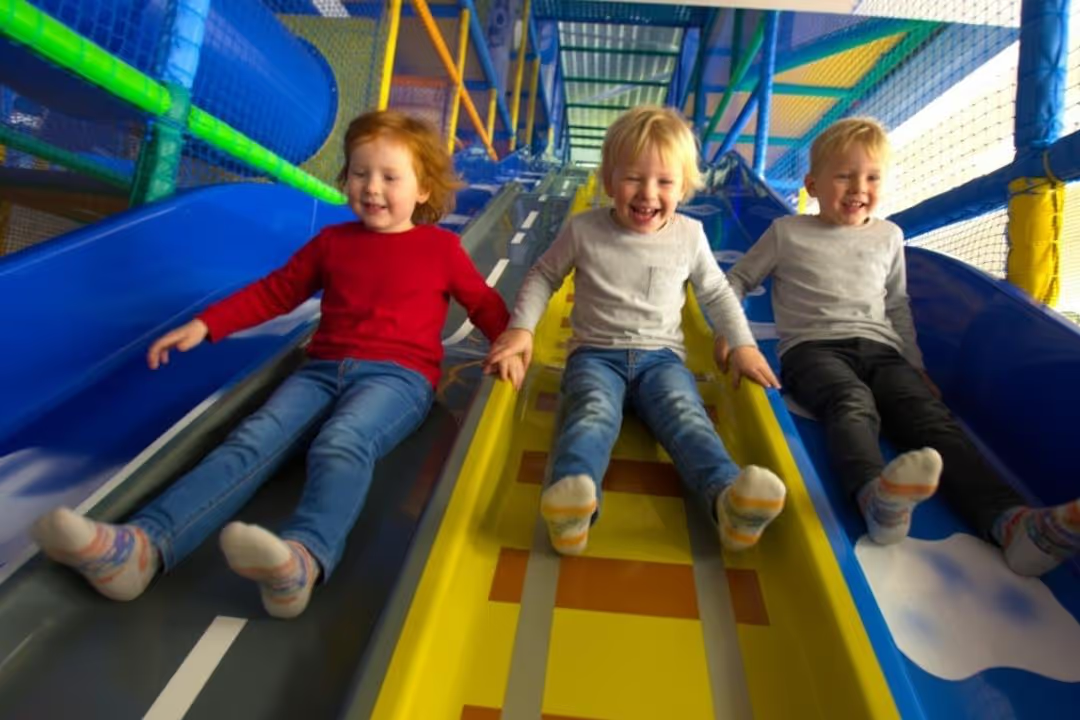
If you have ever watched your child scramble up a climbing frame, bounce with abandon on a soft surface, or charge gleefully down a slide, you have already witnessed active play in action. It looks like pure fun — and it is — but there is a remarkable amount of development happening behind the scenes. From building stronger muscles to boosting self-confidence, active play is one of the most powerful tools your child has for growing up healthy and happy.
In this guide, we will explore exactly how physical play supports your child’s development, what the latest research and national guidelines say, and how you can make sure your little one is getting enough of it — whatever the British weather decides to do.
What Is Active Play?
Active play is any form of play that gets your child moving. It can be structured, like a game of tag with rules, or completely free-form, like tearing around a soft play frame exploring every nook and cranny. The key ingredient is physical movement — running, jumping, climbing, crawling, balancing, and all the wonderfully energetic things children do naturally when given the opportunity.
It is worth noting that active play is not the same as organised sport. While sport has its place for older children, active play is child-led, imaginative, and driven by curiosity rather than competition. For babies, toddlers, and young children, this kind of self-directed physical exploration is exactly what their growing bodies and minds need.
Physical Development: Building Strong Bodies
Gross Motor Skills
Every time your child climbs a ladder, slides down a slope, or clambers through a tunnel, they are developing their gross motor skills — the big, whole-body movements that form the foundation of physical ability. These skills include:
- Balance — learning to stay upright on uneven surfaces, wobble bridges, and ramps
- Coordination — using arms and legs together to climb, swing, and navigate obstacles
- Strength — building core, upper body, and leg muscles through pushing, pulling, and lifting their own body weight
- Spatial awareness — understanding where their body is in relation to the space around them
Research published in the British Journal of Sports Medicine consistently shows that children who engage in regular active play develop stronger musculoskeletal systems and better overall physical fitness. These benefits carry forward into adolescence and adulthood, reducing the risk of obesity and related health conditions later in life.
Fine Motor Skills
Active play does not just work the big muscles. Many play activities also develop fine motor skills — the smaller, more precise movements that children need for writing, drawing, and everyday tasks like doing up buttons. Gripping ropes, manipulating play equipment, and even the act of catching and throwing soft balls all help strengthen hand-eye coordination and finger dexterity.
Bone Health and Physical Fitness
Weight-bearing activities like jumping and climbing are particularly important for building healthy bones during childhood. The NHS highlights that active play helps children develop stronger bones and muscles, maintain a healthy weight, and establish patterns of physical activity that last a lifetime.
Mental Health and Emotional Wellbeing
The benefits of active play extend far beyond the physical. There is a growing body of evidence showing just how important movement is for children’s mental health and emotional development.
Confidence and Self-Esteem
Think about the look on your child’s face when they reach the top of a climbing frame for the first time, or master a slide they were once nervous about. That sense of achievement is enormously powerful. Active play gives children a safe environment to set challenges for themselves, work through them at their own pace, and experience the satisfaction of success.
Each small victory builds confidence. A child who learns they can balance along a beam or navigate a tricky obstacle course starts to believe in their own abilities — and that self-belief spills over into other areas of life, from the classroom to friendships.
Resilience and Emotional Regulation
Active play naturally involves moments of frustration, uncertainty, and even the occasional wobble or tumble. These are not setbacks — they are valuable learning experiences. When a child falls and gets back up, when they try a new route through a play frame and discover it does not work, they are building resilience and learning to manage their emotions.
Physical activity also triggers the release of endorphins, the body’s natural mood boosters. Studies from the Journal of Clinical Child & Adolescent Psychology show that regular physical play is associated with lower levels of anxiety and depression in children, and improved emotional regulation overall.
Risk Assessment and Decision-Making
One of the most underrated benefits of active play is the opportunity it gives children to assess and manage risk. When a child decides whether to climb higher, try a faster slide, or navigate a new obstacle, they are developing critical thinking skills in real time. They learn to weigh up options, consider consequences, and make decisions — skills that are fundamental to healthy development.
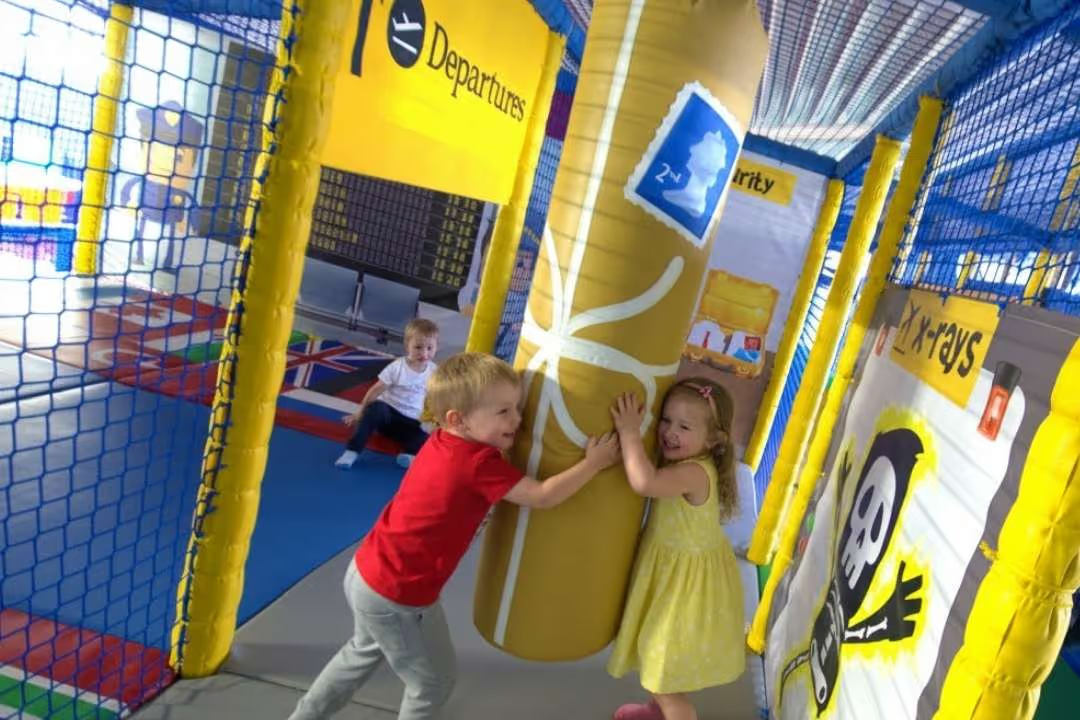
This kind of managed risk-taking is particularly well supported in structured play environments like our main play frame, where the equipment is designed to offer age-appropriate challenges in a safe, padded setting. Children can push their boundaries without the risk of serious injury, which is the ideal balance for developing confidence and good judgement.
Social Development: Learning to Play Together
Active play rarely happens in isolation. Whether your child is navigating a soft play area alongside other children, taking turns on a slide, or cooperating to build something together, they are practising essential social skills.
Key Social Benefits
- Turn-taking and sharing — learning to wait and cooperate with others
- Communication — negotiating, explaining, and expressing needs during play
- Empathy — understanding how other children feel and responding appropriately
- Conflict resolution — working through disagreements and finding solutions
- Making friends — building connections through shared play experiences
For toddlers and preschoolers especially, active play environments provide some of their earliest opportunities to interact with children outside their immediate family. These early social experiences lay the groundwork for healthy relationships throughout life.
What Do the Guidelines Say?
Both the NHS and the World Health Organisation (WHO) have clear recommendations for how much physical activity children need at different ages.
Babies (Under 1 Year)
The WHO recommends that babies should be physically active several times a day in a variety of ways, particularly through interactive floor-based play. Tummy time, reaching for objects, and supervised crawling all count. Babies should not be restrained in a pushchair, highchair, or car seat for more than one hour at a time when awake.
Toddlers (1–2 Years)
Toddlers should spend at least 180 minutes (three hours) a day in a variety of physical activities, including energetic play, spread throughout the day. This does not need to be three hours of non-stop action — it includes everything from walking and climbing to dancing and playing in the garden.
Pre-schoolers (3–4 Years)
The same 180-minute guideline applies, but the NHS recommends that at least 60 minutes of this should be moderate-to-vigorous physical activity. Think running, jumping, climbing, and all the beautifully energetic play that comes naturally to this age group.
Children (5–18 Years)
From age five onwards, children should aim for at least 60 minutes of moderate-to-vigorous physical activity every day. This should include activities that strengthen muscles and bones at least three days a week — climbing, swinging, and jumping are all excellent examples.
The reality is that many children in the UK are not meeting these guidelines. According to Sport England’s Active Lives Children and Young People Survey, around a third of children are not active enough. Making active play a regular part of your family routine is one of the most effective ways to close that gap.
Why Structured Play Environments Matter
Outdoor play is wonderful, and we are lucky to have some fantastic parks and green spaces across the Wirral and Merseyside. But let us be honest — the British weather does not always cooperate. Rain, wind, and cold temperatures can make outdoor play impractical for days or even weeks at a time, particularly with younger children.
This is where structured indoor play environments become invaluable. A well-designed soft play area offers all the physical challenges of outdoor play — climbing, sliding, balancing, crawling — in a warm, safe, weatherproof setting. The padded surfaces mean children can take age-appropriate risks without the worry of hard falls, and the variety of equipment keeps things interesting and challenging as they grow.
Indoor play also complements outdoor play beautifully. As we explored in our article on soft play vs outdoor play, children benefit most from a mix of both. Outdoor play offers fresh air, nature, and open space, while indoor play environments provide consistent access to physical challenges regardless of the weather or season.
Practical Tips for Encouraging Active Play
Getting your child moving does not require expensive equipment or elaborate planning. Here are some simple ways to build more active play into your family life:
At Home
- Clear a space — even a small area of floor gives toddlers room to crawl, roll, and explore
- Put on some music — dancing is brilliant exercise and children love it
- Build obstacle courses — cushions, blankets, and cardboard boxes make excellent tunnels and hurdles
- Limit screen time — the NHS recommends avoiding screens for children under two, and limiting them for older children to free up time for active play
Out and About
- Visit local parks — swings, climbing frames, and open grass are all free and fantastic
- Walk whenever possible — even short walks to the shops build physical activity into the day
- Explore soft play — particularly useful on rainy days or during colder months when outdoor options are limited
- Try new things — swimming, cycling, and nature walks all count as active play
Making It a Habit
- Be consistent — aim for some form of active play every day, even if it is just 20 minutes
- Join in — children are more likely to be active when their parents play with them
- Follow their lead — let your child choose how they want to move and explore
- Keep it fun — the moment play feels like a chore, children lose interest
When to Be Concerned
Every child develops at their own pace, and there is a wide range of what is considered normal. However, if you have concerns about your child’s physical development — for example, if they seem unusually reluctant to move, have difficulty with balance or coordination compared to children of a similar age, or seem to tire very quickly — it is always worth having a chat with your health visitor or GP. Early support can make a real difference.
The Bigger Picture
Active play is not a luxury or a nice-to-have — it is a fundamental part of healthy childhood development. It builds strong bodies, resilient minds, and confident little people who are ready to take on the world. The research is clear, the guidelines are straightforward, and the good news is that encouraging active play does not have to be complicated or expensive.
Whether it is splashing in puddles at the local park, building a den in the living room, or spending an afternoon exploring a soft play frame, every bit of movement counts. The most important thing is that your child has regular opportunities to climb, jump, run, and play — and that they are having fun while they do it.
At Bubbles World of Play, we have designed our play areas with exactly this in mind. From dedicated toddler zones to our multi-level main play frame, every element is built to support physical development, spark imagination, and give children the freedom to challenge themselves in a safe, supportive environment. If you would like to see the benefits of active play in action, we would love to welcome your family for a visit.