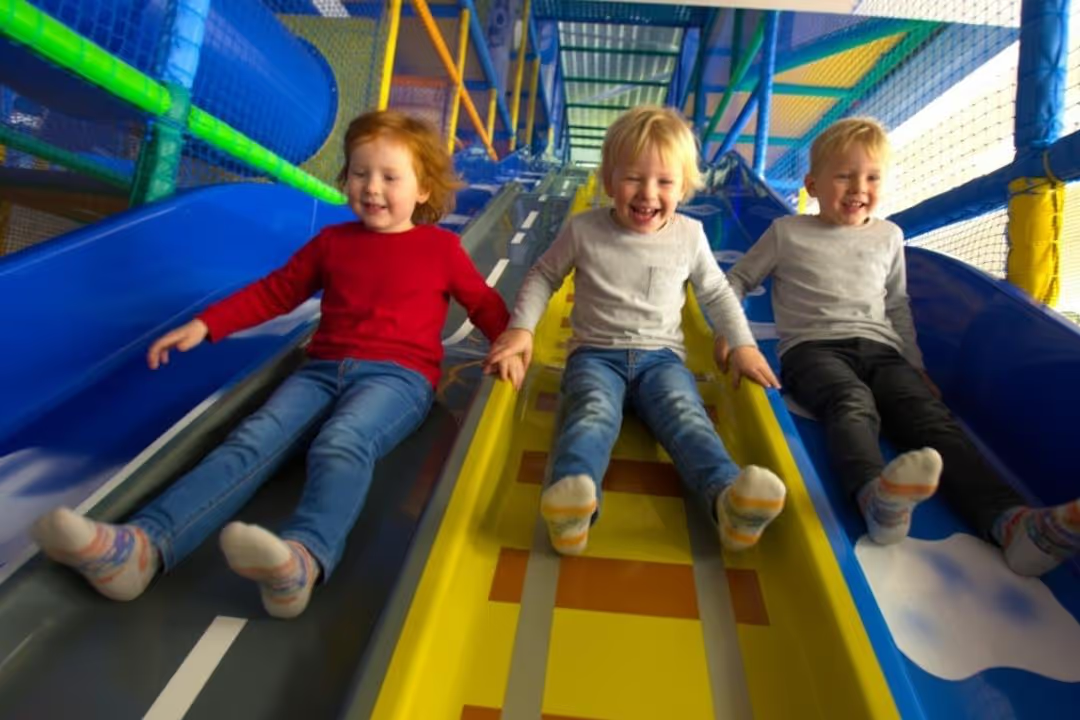
Discover the unique benefits of soft play and outdoor play for child development. Learn why both types of play are essential for raising healthy, happy children.
As parents, we’ve all heard conflicting advice: “Kids need more outdoor time!” versus “Indoor soft play develops crucial skills!” The truth? It’s not an either-or situation. Both soft play and outdoor play offer unique developmental benefits that children need for healthy growth.
Let’s explore why choosing between soft play and outdoor play is the wrong question - and why the best approach incorporates both into your child’s routine.
Understanding Soft Play
Soft play refers to indoor play environments featuring padded equipment, climbing structures, ball pits, slides, and interactive zones designed specifically for children’s development and safety.
Key Characteristics:
- Climate-controlled environment
- Padded safety surfaces
- Age-appropriate zones
- Supervised settings
- Structured play areas
- Educational elements integrated into play
Modern soft play centres have evolved far beyond simple ball pits. Today’s facilities incorporate educational themes, sensory experiences, and developmental play zones that support specific skills.
Understanding Outdoor Play
Outdoor play encompasses any physical activity in natural or open-air environments - from playground visits to nature walks, beach trips to garden adventures.
Key Characteristics:
- Natural environment exposure
- Variable weather conditions
- Open-ended play opportunities
- Natural sensory experiences
- Seasonal variety
- Connection with nature
The Unique Benefits of Soft Play
1. Year-Round Reliability
Why It Matters: British weather is unpredictable. Soft play provides consistent physical activity regardless of rain, cold, or snow. This reliability ensures children maintain active routines throughout the year.
Developmental Impact: Regular physical activity is crucial for healthy development. When outdoor play is limited by weather, soft play fills the gap, preventing sedentary behaviour during winter months.
Parent Reality Check: We all know the frustration of planning outdoor activities only to face torrential rain. Soft play eliminates weather-related stress while ensuring kids still burn energy.
2. Targeted Developmental Zones
Quality soft play centres design specific zones to develop particular skills:
Climbing Structures
- Upper body strength
- Coordination
- Spatial awareness
- Problem-solving (route planning)
Ball Cannons and Interactive Games
- Hand-eye coordination
- Cause-and-effect understanding
- Social cooperation
- Fine motor skills
Role Play Areas
- Imagination development
- Social skills practice
- Language development
- Empathy building
Sensory Zones
- Sensory integration
- Emotional regulation
- Cognitive development
- Exploration skills
3. Controlled Social Environment
Soft play creates ideal conditions for developing social skills:
Mixed-Age Interaction Children naturally encounter peers of different ages, learning to adapt communication and play styles accordingly.
Supervised Safety Parents can observe and guide social interactions while children explore independence in a safe environment.
Sharing and Turn-Taking Limited resources (slides, specific toys) create natural opportunities to practice patience and sharing.
Conflict Resolution Minor conflicts arise and resolve in controlled settings where adults can guide problem-solving.
4. Safety Features Support Risk-Taking
This might sound contradictory, but soft play’s safety features actually encourage healthy risk-taking:
Padded Surfaces Allow children to attempt challenging physical feats with reduced injury risk, building confidence.
Age-Appropriate Design Equipment scaled to abilities encourages pushing boundaries safely.
Supervised Environment Adults nearby provide security for attempting new skills.
Progressive Challenges Children can gradually increase difficulty as confidence grows.
5. Inclusive Accessibility
Weather Independence Children with asthma, allergies, or weather sensitivities can play comfortably.
Mobility Accommodations Many soft play centres design inclusive zones for children with varied abilities.
Sensory Considerations Dedicated quiet zones support children with sensory processing needs.
Year-Round Access No seasonal limitations on availability.
The Unique Benefits of Outdoor Play
1. Nature Connection and Environmental Awareness
Irreplaceable Value: Only outdoor play provides direct nature experiences - feeling grass, watching clouds, observing wildlife, experiencing seasons firsthand.
Long-Term Impact: Research consistently shows that childhood nature connection predicts:
- Environmental stewardship in adulthood
- Better mental health outcomes
- Reduced stress levels
- Enhanced creativity
Developmental Benefits:
- Scientific curiosity (Why do leaves change colour?)
- Observational skills (Spotting birds, tracking clouds)
- Respect for living things
- Understanding natural cycles
2. Vitamin D Production
Critical Health Factor: Outdoor exposure enables vitamin D synthesis, essential for:
- Bone development
- Immune function
- Mood regulation
- Overall health
UK Context: With limited winter sunlight, maximizing outdoor time during brighter months becomes crucial for vitamin D levels.
Practical Application: Even 20-30 minutes of outdoor play provides significant vitamin D benefits during spring and summer months.
3. Open-Ended Creativity
Unstructured Possibilities: Outdoor environments offer limitless creative opportunities:
- Stick becomes sword, wand, or fishing rod
- Leaves transform into pretend food
- Puddles become oceans
- Hills turn into mountains to conquer
Imagination Development: Without predetermined play purposes, children invent games, create scenarios, and develop rich imaginative worlds.
Problem-Solving Practice: Natural environments present unpredictable challenges requiring creative solutions - how to cross a stream, build a den, or navigate uneven terrain.
4. Unrestricted Movement Space
Physical Freedom: Outdoor spaces allow running, jumping, and large movements often restricted indoors.
Gross Motor Development:
- Running builds cardiovascular fitness
- Jumping strengthens legs and coordination
- Throwing develops arm strength and aim
- Climbing builds overall body strength
Spatial Awareness: Navigating varied terrain, judging distances, and moving through open spaces develops sophisticated spatial understanding.
5. Sensory Richness
Natural Sensory Experiences:
- Touch: Different textures (bark, sand, grass, water)
- Smell: Flowers, rain, fresh air, seasons
- Sound: Birds, wind, rustling leaves, water
- Sight: Colours, patterns, movements in nature
- Taste: Safe exploration (growing vegetables, picking berries)
Sensory Integration Benefits: Natural environments provide complex, ever-changing sensory input that supports sensory processing development.
Why Both Matter: The Complementary Approach
The most effective strategy combines both play types, leveraging their unique strengths:
Balanced Development
Soft Play Strengths:
- Structured skill development
- Reliable year-round access
- Social practice in controlled settings
- Targeted physical challenges
Outdoor Play Strengths:
- Nature connection
- Open-ended creativity
- Vitamin D and fresh air
- Unrestricted movement
Combined Result: Children develop comprehensively across physical, social, emotional, and cognitive domains.
Weather-Responsive Flexibility
Practical Family Life:
Sunny Summer Day: Prioritize outdoor play for vitamin D, nature connection, and open space.
Rainy Winter Afternoon: Choose soft play for physical activity and social interaction.
Spring/Autumn Unpredictability: Mix both - outdoor mornings when weather permits, soft play backup when rain arrives.
Hot Summer Days: Alternate between outdoor morning play (before extreme heat) and indoor afternoon soft play.
Age-Specific Combinations
Babies & Toddlers (0-3 years):
- Soft play: Dedicated baby zones, climate control, soft surfaces
- Outdoor: Sensory experiences, tummy time on grass, gentle swinging
- Balance: 60% soft play, 40% outdoor (weather dependent)
Preschoolers (3-5 years):
- Soft play: Social skill development, structured challenges
- Outdoor: Imaginative play, nature exploration, physical freedom
- Balance: 50/50 split works well
Primary Age (5-11 years):
- Soft play: Complex physical challenges, social interaction
- Outdoor: Sports, nature activities, adventure
- Balance: 40% soft play, 60% outdoor (when possible)
Social Development Opportunities
Different Social Contexts:
Soft Play:
- Structured interaction
- Mixed-age play
- Turn-taking practice
- Supervised conflict resolution
Outdoor:
- Free play with friends
- Team sports
- Cooperative games
- Independent social navigation
Combined Learning: Children develop social flexibility, adapting behaviour across different settings and social structures.
Creating Your Balanced Play Schedule
Weekly Framework
Example Balanced Week:
Monday: Outdoor park after school (1 hour)
Tuesday: Home/indoor play day
Wednesday: Soft play centre visit (2 hours)
Thursday: Garden/outdoor exploration (1 hour)
Friday: Free play day
Saturday: Outdoor adventure (beach, nature walk, 2-3 hours)
Sunday: Soft play or outdoor depending on weather and energy
Total: 3-4 outdoor sessions, 1-2 soft play visits, balance days
Seasonal Adjustments
Winter (November-February):
- Increase soft play frequency
- Shorter outdoor sessions (focus on fresh air)
- Weekend outdoor adventures when weather allows
- Balance: 70% indoor/soft play, 30% outdoor
Spring/Autumn (March-May, September-October):
- Optimize outdoor time during pleasant weather
- Soft play as weather backup
- Balance: 50/50 split
Summer (June-August):
- Maximize outdoor play for vitamin D
- Soft play for excessively hot days or rainy periods
- Balance: 70% outdoor, 30% soft play
Budget-Friendly Balance
Quality play doesn’t require unlimited budgets:
Free Outdoor Play:
- Local parks
- Nature walks
- Beach visits
- Garden play
Affordable Soft Play:
- Off-peak pricing (weekday mornings)
- Multi-visit passes
- Birthday party attendance
- Special offers and promotions
Realistic Budget:
- 1 paid soft play visit weekly: £50-60/month
- Outdoor play: Mostly free (occasional parking/café treats)
- Total: £50-80/month for varied, balanced play
Recognizing When Your Child Needs What
Signs Your Child Needs More Outdoor Play
- Requesting nature activities
- Restlessness indoors
- Fascination with weather, seasons, animals
- Collecting natural objects (sticks, leaves, stones)
- Asking to go to parks or gardens
What to Do: Prioritize outdoor time, even brief sessions. Garden play, park visits, or nature walks satisfy this need.
Signs Your Child Needs More Soft Play
- Excess energy without physical outlet
- Social frustration (limited friend interaction)
- Boredom with home toys
- Requesting specific activities (climbing, slides)
- Rainy-day restlessness
What to Do: Schedule soft play visit or create physical challenges at home (obstacle courses, indoor climbing).
Signs of Good Balance
- Happy engagement in both environments
- Varied play themes (nature themes AND social role play)
- Good physical development
- Positive social interactions
- Emotional regulation improving
- Curiosity across different settings
Addressing Common Concerns
”Isn’t outdoor play always better?”
Short Answer: No - both offer unique benefits.
Reality: While outdoor play provides irreplaceable nature connection, it can’t offer:
- Year-round reliability in British climate
- Controlled social environments
- Targeted developmental zones
- Weather protection for children with health needs
Best Approach: Prioritize outdoor when possible, embrace soft play as valuable alternative and complement.
”Will soft play make my child prefer indoor activities?”
Research Says: No evidence supports this concern.
Actual Outcome: Children who experience both develop appreciation for different play types. Variety enhances adaptability rather than creating preference dependency.
Real Experience: Most children naturally gravitate toward outdoor play when weather permits, using soft play as fun alternative rather than exclusive choice.
”What about screen time versus physical play?”
Critical Distinction: This is where the real either-or exists. Screen time is passive; both soft play and outdoor play are active.
Recommended Priority:
- Physical play (outdoor OR soft play)
- Creative activities (arts, crafts, building)
- Limited, quality screen time
Balance Approach: Both soft play and outdoor play are exponentially better than screens for development.
Making the Most of Both Environments
Maximizing Soft Play Benefits
Choose Quality Facilities: Look for:
- Clean, well-maintained equipment
- Age-appropriate zones
- Educational elements
- Adequate supervision
- Positive staff interaction
Engage Actively:
- Observe your child’s social interactions
- Encourage trying new challenges
- Facilitate positive peer interactions
- Practice turn-taking and sharing
Visit Regularly: Familiar environments allow children to focus on skill development rather than orientation.
Maximizing Outdoor Play Benefits
Embrace All Weather: Appropriate clothing enables outdoor play year-round:
- Waterproofs for rain
- Layers for cold
- Sun protection for summer
Follow Child’s Lead: Let children direct outdoor exploration and play themes.
Minimize Restrictions: Allow appropriate messiness, risk-taking, and exploration within safe boundaries.
Create Regular Routines: Daily outdoor time (even 20 minutes) provides more benefit than occasional extended sessions.
The Perfect Partnership
Rather than competing, soft play and outdoor play form perfect partners in child development:
Soft Play Provides:
- Weather reliability
- Structured skill development
- Social practice
- Safe risk-taking
- Targeted challenges
Outdoor Play Provides:
- Nature connection
- Open creativity
- Sensory richness
- Vitamin D
- Environmental awareness
Together They Create:
- Well-rounded physical development
- Diverse social experiences
- Comprehensive sensory integration
- Adaptable, confident children
- Healthy, happy childhoods
Practical Implementation
Start This Week:
Day 1-2: Assess current balance - count outdoor versus indoor play hours
Day 3-4: Identify gaps - too much of one type?
Day 5-7: Adjust schedule incorporating both play types
Ongoing: Monitor child’s engagement, energy, and happiness
Adjust: Seasonal changes, individual preferences, family schedule
Final Thoughts
The soft play versus outdoor play debate creates a false choice. Both offer distinct, valuable benefits that work together to support comprehensive child development.
The best approach? Embrace both:
- Maximize outdoor play when weather and time permit
- Utilize quality soft play for reliable physical activity and social experiences
- Adapt balance seasonally and based on individual child needs
- Focus on variety rather than rigidity
Your child doesn’t need only outdoor adventures or exclusively soft play sessions - they need both, woven into a rich tapestry of varied experiences that support their growth across all developmental domains.
Looking for Quality Soft Play?
Bubbles World of Play offers over 30 themed educational zones designed to support every aspect of your child’s development - from physical challenges to social interaction, creativity to confidence building.
While we celebrate the irreplaceable value of outdoor play, we’re proud to provide exceptional indoor soft play experiences that complement nature time and ensure year-round physical activity.
Visit us at Marine Point, New Brighton, and discover why soft play and outdoor play aren’t competitors - they’re partners in raising healthy, happy, well-rounded children.
Plan Your Visit: Check our opening times and admission prices to add quality soft play to your balanced approach to childhood play.